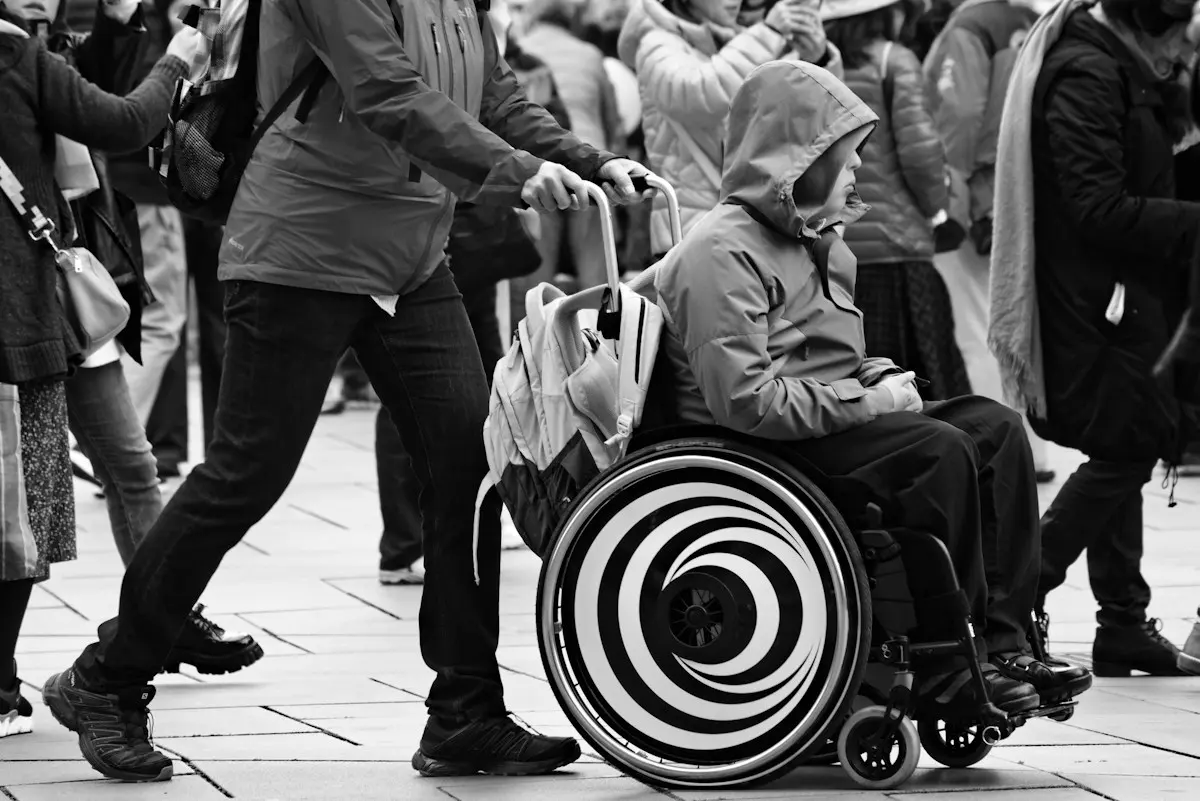
A visitor in a wheelchair who hears at the entrance that their companion needs a separate € 35 ticket. A visually impaired visitor who finds the accessible toilet locked for the third time. A parent searching the event page to see whether the site is grass or gravel, and finding nothing.
None of this comes from bad intentions. Usually nobody thought about it in advance. This article walks through what you, as the organiser of a festival, parade, sports day or performance, can arrange in a few evenings: what Dutch law expects, what to do about companions, what to tell visitors beforehand and who is responsible on the day itself.
What Dutch law expects
If you organise an event and sell tickets, you are offering a service. That brings you under the Equal Treatment (Disability or Chronic Illness) Act, known in Dutch as the Wgbh/cz. Article 5b prohibits discrimination when offering goods and services. Two obligations follow from it:
- Effective adjustments (article 2): in a specific case you do what is needed to let someone with a disability take part, unless that is a disproportionate burden for you. The act specifically mentions admitting assistance dogs.
- General accessibility (article 2a): you gradually work towards an event that is accessible to everyone, again within the limit of a disproportionate burden.
For readers outside the Netherlands: complaints under this act go to the Netherlands Institute for Human Rights (College voor de Rechten van de Mens). Its rulings are not binding, but they carry weight and are published with the organisation's name.
"Gradually" sounds generous, but the Institute reads it strictly. Ruling 2024-106 concerned a visually impaired visitor at Lowlands 2023, one of the country's largest festivals. The accessible toilets were locked several times, nobody with a key could be found, and her reports to the information desk never reached the organisation. The Institute found that the organiser had discriminated. Even when you are allowed to improve gradually, simple and cheap measures, such as a coordinator and keys for those who need them, should be in place straight away. With 65,000 visitors mistakes happen, but it is the organiser's job to prevent them as far as possible.
The lesson is not about expensive structures. It is about execution: is the facility there, does it work, and does your team know about it?
The companion: a ticket without an interrogation
Many visitors with a disability come with someone who helps: pushing a wheelchair, guiding, queueing or stepping in when it gets busy. On that companion's ticket, the rulings are clear.
Ruling 2024-61 of 24 July 2024 concerned an autistic visitor with a season pass to an amusement park. From August 2023 he could only use the low-stimulus queues with a companion, and that companion had to buy their own ticket. For eight months he could not use the rides independently. The Institute found that the park discriminated. Ruling 2025-129 of 27 November 2025 reached the same conclusion about an indoor park that required a companion paying full price for its low-stimulus queue. Autistic visitors could not come on their own, and paid extra for the privilege.
No law says every companion must get in free. But the line is clear: if you require a companion, don't charge them. Better still, don't require one. People who can come on their own should be able to.
In practice:
- Create a separate "Companion" ticket type at € 0, with a description saying who it is for: one per visitor who needs assistance. With MijnEvent there is no platform fee on free tickets.
- Count companions in your capacity. They are on site, so they belong in your visitor numbers and your safety plan. Give the ticket type its own limit if you want to keep track.
- Don't ask for medical proof. Requesting and storing a doctor's note is sensitive and creates GDPR obligations. Accept what people already carry, such as the Dutch public transport companion pass (only issued to people who cannot travel by public transport on their own), or take your visitor's word for it. The risk of someone misusing a free companion ticket rarely outweighs the hassle of checking.
Say what is there, and what isn't
People with a disability plan a day out in advance. Without information, they are more likely to stay home than to take a chance. Add a short accessibility section to your event page or your FAQ:
- Ground and distances: grass, gravel, sand or paving? How far is the nearest disabled parking space from the entrance?
- Accessible toilets: how many, where, and are they open or locked with a key?
- View and position: is there a raised viewing platform, and where is it relative to the stage or the parade route?
- Sensory load: is there a quiet area to recover? Will there be strobe lights or fireworks?
- Assistance dogs: welcome. Say so, because not everyone knows you cannot refuse them.
- Contact: a phone number or email address for questions beforehand, and where to go on the day.
Be honest about what is missing. "The site is partly unpaved and difficult for wheelchairs when it rains" helps more than a vague "we do our best". Your ticket shop counts too: since the European Accessibility Act, online ticket sales must be accessible for many providers, including for someone using a screen reader or only a keyboard.
Ask "Do you need anything?", not for a diagnosis
In June the Dutch Ministry of Health launched a campaign around the question "Heb je iets nodig?" ("Do you need anything?"), ten years after the Netherlands signed the UN Convention on the Rights of Persons with Disabilities. The question works at your event too, as long as you ask it well.
Ask about the need, not the condition. "Would you like to use the viewing platform?" or "Do you need a parking space near the entrance?" tells you what you need to know. "Which disability do you have?" gives you health data, which is special category data under article 9 of the GDPR. You may only process it with explicit consent, and it comes with extra obligations.
Ask these questions after the purchase if you can, so your checkout stays short, and delete the answers once the event is over. Read how that works in collecting attendee details after the ticket sale.
On the day: one point of contact
The Lowlands ruling shows where things usually go wrong: not in the policy, but on the day. A few measures prevent most of it:
- Appoint an accessibility coordinator. One person who knows what has been arranged, can be reached by phone and can step in.
- Brief your gate team. Security staff and ticket checkers need to know that a companion ticket is valid, that assistance dogs are allowed in and whether there is a quieter entrance.
- Check the facilities during the event. Walk past the accessible toilets and the viewing platform every hour: open, clean, and not used as storage or by stall staff.
- Make sure reports arrive. If someone tells a volunteer or the information desk, it should reach the coordinator within minutes.
- Put the contact number in your confirmation email or on the ticket, so visitors don't have to search for it.
If a complaint comes in afterwards, respond quickly and explain what you will do with it. In the same case the Institute found a response after more than a month too slow and the email too brief, although it did not condemn the complaint handling overall because the organiser did act on the visitor's suggestions.
What's coming: the European Disability Card
With Directive (EU) 2024/2841 the EU introduced a European Disability Card. Member states must write the rules into national law by 5 June 2027 and start issuing the card from 5 June 2028. With it, people with a recognised disability can use the special conditions that apply to disabled people in another EU country, including at cultural events, sports centres and amusement parks. According to the European Commission, that covers things like free or reduced entry, priority access and personal assistance.
How the Netherlands will implement the directive is not yet settled. If you already have a companion policy, expect that within a few years visitors from Germany or Belgium will show this card at your gate as well.
In short
- Create a free ticket type for companions and don't ask for medical proof.
- State on your event page what is and isn't accessible.
- Ask what someone needs, not what someone has.
- Appoint a coordinator, brief your gate team and check the facilities during the event.
Want to set up companion tickets, access information and an accessible ticket shop in one go? With MijnEvent you create your event for free and only pay a fixed fee per ticket sold; € 0 companion tickets cost you nothing. See pricing for the details.