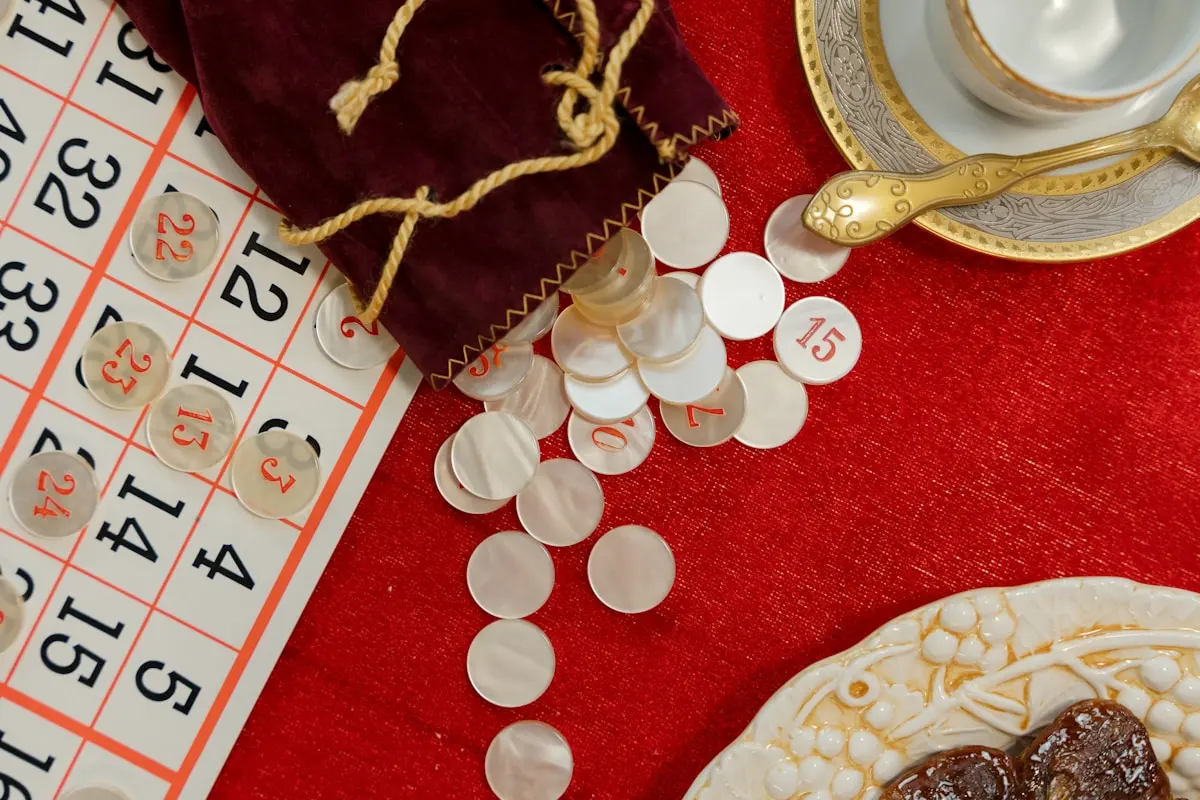
It is one of the most ordinary things at an event. A tombola at the flower parade to help fund the floats. A bingo night at the village hall on a Saturday. Raffle tickets sold next to the entry tickets, with a weekend away as the top prize. Nobody dwells on it for long, and the proceeds go to a good cause — so what could possibly go wrong?
Legally, quite a lot. Because the moment participants pay a stake and chance decides who wins, you are running a game of chance. And the Dutch Gambling Act (Wet op de kansspelen) starts with a prohibition, not an exemption.
This article sets out what is allowed, which licence you apply for where, and where gambling tax enters the picture. It is not a scare story — the rules are perfectly workable, as long as you know them in time.
A note for readers outside the Netherlands. Everything below is Dutch law, and it is unusually strict compared with much of Europe. If you organise events elsewhere, treat this as a worked example of how a national gambling regime can catch ordinary event fundraising — and check your own regulator before you print raffle tickets.
The default rule: prohibited unless licensed
Article 1(1)(a) of the Gambling Act is short and strict. It prohibits "giving the opportunity to compete for prizes or premiums, where the winners are designated by any determination of chance over which the participants generally cannot exercise a decisive influence, unless a licence has been granted under this Act".
Break that down and you get three conditions that nearly every raffle meets:
- People compete for a prize. A bottle of wine counts just as much as a thousand euros.
- Chance designates the winner. Not knowledge, not skill.
- Participants have no decisive influence over it. A quiz or a game of skill is different — that is not a game of chance.
What the article does not contain: a lower threshold. There is no amount below which it "doesn't really matter". A tombola with ten garden gnomes falls formally under the same prohibition as a lottery with a car as the top prize. The difference lies not in whether you need a licence, but in who grants it and how much work it takes.
There is one important exception: bingo. More on that below.
The incidental lottery: town hall or Gambling Authority
For a one-off raffle in aid of a good cause there is a separate route, set out in article 3 of the Gambling Act. Its core: a licence may be granted where the opportunity is opened up "solely in order to serve some general interest with the proceeds thereof".
So the proceeds must go to a public-benefit purpose — sport, welfare, culture, education, nature, healthcare, animal welfare. Not to the running costs of your own commercial party.
Where you apply depends on a single figure:
| Combined value of the prizes | Who grants the licence |
|---|---|
| Under €4,500 | The municipal executive of the municipality where the draw takes place |
| €4,500 or more | The Dutch Gambling Authority (Kansspelautoriteit) |
That is the literal wording of article 3(1). Note that it turns on the value of the prizes, not on the proceeds from ticket sales. Sell €20,000 worth of raffle tickets with a €3,000 prize package, and you are still at the town hall.
What the municipal route involves
Below €4,500 it is an ordinary municipal licence application. Practice varies: some municipalities charge a fee, others do not; some add their own requirement on the share that must go to the cause. Check your own municipality's website rather than the neighbouring one's. Apply well in advance — allow several weeks.
What the Gambling Authority route involves
Above €4,500 things get more serious. For the incidental article 3 lottery, the Gambling Authority applies among others:
- Fees of €600 for a prize package up to €50,000, €5,200 up to €500,000, and €30,600 above that.
- A processing time of up to eight weeks from receipt of the application.
- Validity of six months, with a maximum of thirteen draws in that period.
- At least 40% of the proceeds must go to the stated public interest. At most 60% may go on costs: printing, notary, accountant, the prizes themselves and gambling tax.
- Accounting afterwards: within three months of the final draw you submit a completed settlement form, an accountant's assessment statement, the notarial record including draw lists, and evidence that the money actually reached the cause.
That accounting duty is the part that surprises organisers most often. Budget for it — an accountant's statement is not a free signature.
Selling raffle tickets online is allowed
For most organisers this is the practical good news: you may sell raffle tickets online. The Gambling Authority explicitly permits this under an incidental lottery licence, provided the buyer receives proof of participation — by post, by email, or via a bank statement showing the lottery's name.
What may not happen online is the draw itself. That must take place at a physical location people can attend. Using a digital drawing system is fine; the point is that the moment is public and attendable.
For an organiser who already runs a ticket shop, that is a convenient combination: raffle tickets as a separate ticket type alongside admission, paid through the same checkout, with the confirmation email as proof of entry. If you are looking to raise extra money from the same audience without a lottery, a donation field at checkout is legally far simpler: a gift is not a game of chance.
Bingo and the wheel of fortune: licence-free, with strings
Here sits the key exception, and for the association world it is worth its weight in gold. Article 7c of the Gambling Act covers the "small game of chance": bingo, kienen, a wheel of fortune, an envelope game, a bird-picking game. No licence required.
But the article does impose four hard conditions, and they are stricter than most people assume:
1. You must be an association that has existed for at least three years. The law says "a Dutch association that has existed for at least three years". A foundation strictly falls outside it, as does a freshly founded club or a commercial company.
2. The association has a clearly defined purpose that is not the practice of gambling. A football club, a music society, a carnival association: fine. A club set up to run bingo nights: no.
3. The prizes stay within the limits. Prizes or premiums, in money or goods, may not exceed €400 per series or set, and their combined value may not exceed €1,550 per gathering. Those amounts are written into the law and have been unchanged for years.
4. You notify the municipal executive at least fourteen days in advance, in the manner they prescribe, for the municipality where the gathering takes place. Notification is usually free and informal, but the deadline is hard: fourteen days, not ten.
Stay within those bounds and a bingo night is entirely legal with no licence application. Go beyond them — say, a €750 top prize — and it is no longer a small game of chance, and you are back at the lottery licence.
Gambling tax: 37.8% above €449
This is the part most often forgotten, and the part that costs the most after the fact.
Prizes from a game of chance attract gambling tax. Since 1 January 2026 the rate is 37.8 per cent, set in article 5 of the Gambling Tax Act. That is a steep climb: it was 30.5% in 2024 and 34.2% in 2025.
There is an exemption: article 4 of the same act exempts prizes up to and including €449. If every prize in your raffle stays below that, you remit nothing.
Three things to read carefully:
Prizes in kind count. A weekend on Ameland worth €600 is fiscally just as much a prize as €600 in cash. You value it at market value.
Prizes on the same ticket are added together. Article 4(2) provides that all prizes owed by the same debtor and falling on the same chance event count together as one prize. Three €200 prizes on one winning ticket is therefore €600 — and taxable.
The organiser remits, not the winner. For a Dutch game of chance you file and you pay. The winner does nothing and does not report the prize on their income tax return.
The gross-up catch
If you as the organiser absorb the tax — the winner receives the full €1,000 and you pay the tax office — article 5(2) requires you to multiply the prize by 100/62.2 before applying the rate.
Worked example: on a net prize of €1,000 the taxable base becomes €1,000 × 100/62.2 = €1,607.72. At 37.8% that is €607.72 in tax. So that top prize costs you not €1,000 but well over €1,600.
To avoid it, you can withhold the tax from the prize instead. But say so up front in your rules of play — a winner expecting €1,000 who receives €622 is understandably surprised.
The easy route: a prize draw with no stake
One category sits outside this entire framework, and for many events it is enough: the promotional game of chance. That is a prize draw you run to promote your product, service or organisation, where entry is free.
For that you need no licence, as long as you stay within the Dutch code of conduct for promotional games. The core rules:
- No stake. You may pass on communication costs at most, up to €0.45 per entry, and you must state that amount in advance. Charge more and it counts as a stake, putting you back under the licence requirement.
- Rules of play published in advance, covering the drawing method, the prize package and the run time.
- You genuinely award the prizes — you may not withhold them.
- With a prize package above €4,500, extra rules apply: at most one such large campaign per year per product or organisation, and the package is capped at €100,000.
- Be restrained towards minors.
Concretely: "among everyone who buys a ticket before 1 September we are drawing a meet-and-greet" is a promotional game — there is no separate stake for the draw. "Buy a raffle ticket for €5 and win a meet-and-greet" is a lottery, with everything that entails.
That one-sentence difference decides whether you need to visit the town hall.
A practical decision path
Walk these four questions, in this order:
1. Is there a stake? No → promotional game, follow the code of conduct, done. Yes → continue.
2. Is it bingo, kienen or a wheel of fortune, run by an association that has existed for three years? Yes, and prizes stay under €400 per round and €1,550 per gathering → notify the municipal executive at least fourteen days ahead. Done.
3. Is it a raffle? Work out the combined value of your prizes. Under €4,500 → licence from the municipality. Above → Gambling Authority, allow eight weeks and fees from €600.
4. Is any prize above €449? Yes → arrange the gambling tax return, and decide in advance whether you gross up or withhold. Put it in your rules of play.
And a fifth, practical one: budget honestly. On a larger lottery the fees, the notary and the accountant's statement together can easily exceed the prizes. For smaller events a raffle is therefore often less efficient than it looks — where tickets plus a well-aimed donation ask raise the same amount without a single form.
Where this fits in the bigger picture
A raffle is rarely the only thing you need a licence or notification for. If you also serve alcohol, the article 35 exemption applies. If you play music, there are the collecting societies. And the event licence itself is its own track.
The common thread is always the same: most of these rules are perfectly manageable, but they have lead times. Fourteen days for a bingo notification, several weeks for the municipality, eight weeks for the Gambling Authority. Anyone who discovers that once the posters are up has a problem that a calendar would have prevented.
Selling raffle tickets or taking donations alongside your event tickets happens in the same shop on MijnEvent, with a flat fee per ticket instead of a percentage of your revenue — and we charge nothing at all on donations. See what it costs or register your organisation and put your first sale live this week.
This article is general information, not legal advice. Municipalities apply their own policy rules on some points; when in doubt, check your own municipality's website or contact the Gambling Authority.