Almost no organisation deliberately chooses five separate systems. It just grows that way.
First came the website, built by a local agency. Then ticket sales, because that agency could not do those. The year after, a web shop for the club shirts, because the ticketing system did not know what a product was. The membership list was already in a spreadsheet and stayed there. And since last year there has been a separate till app at the bar, because the drink tokens ran out.
Five systems, five login screens, five invoices. And above all: five files with the same people in them, none of which know about the others.
What separate tools really cost
The subscriptions are the least of it. What it actually costs appears on no invoice at all:
Exports. You want to know who is coming. That means a CSV from the ticketing system, a list from the web shop, the member list from the spreadsheet, and then deduplicating by hand. Every event, all over again.
Volunteers. At the entrance someone stands with a phone for the tickets, a printed member list for the members and a second sheet for whoever booked parking space 12. Three checks, three chances of error, one queue that stops moving.
Your GDPR records. Every tool that processes personal data needs a processor agreement and a line in your record of processing activities. With five tools that is five agreements, five retention periods and five parties where a subject access request can land.
The blame question. When the link between your site and your ticket shop stops working, the agency points at the ticketing system and the ticketing system points at the agency. You are in the middle, and your event is in three weeks.
Percentages that stack. Most separate tools charge a percentage: of the ticket price, of the web shop revenue, of the bar takings. That is precisely the model that runs harder the better you do.
What now fits on a single account
MijnEvent started out as a ticketing platform, but that has not been what it is for a while. Here is what now runs on the same account, the same subdomain and the same Mollie connection:
| Module | What for | Price |
|---|---|---|
| Ticket sales | The basics: events, ticket types, capacity, waiting list | €0.50 per paid ticket, or €0.25 with the Organiser plan |
| Rentals & reservations | Boats, bikes, courts, rooms, equipment | €5.00 per booking, or €0.50 with the year licence |
| Reserved seating | Floor plans for theatres and cinemas | Free — no cost per seat |
| Memberships & season passes | Dues, automatic renewal, membership card in the wallet | Year licence €175 + €0.25 per collection |
| Merchandise & web shop | Shirts, club gear, local products, collected at your event | €0.50 per order |
| Food trucks & mobile catering | Ordering at the stall or the bar, a till screen per outlet | €0.35 per order |
| Parking & camping pitches | Sell pitches in advance, scan on number plate | €0.75 per reservation |
| Courses & workshops | Series with one enrollment and one pass | €0.50 per enrollment |
| Donations & fundraising | A donation page and a donation field in the checkout | 0% fee on donations |
| Event feedback | Anonymous feedback, only to the people who actually came | €10 per round, the first one free |
| Attendee details | Dietary needs, size, company name — asked after the purchase | €50 per event, the first one free |
| Attendee mailings | Mail exactly the right group, without export lists | Free around your event |
| Safety & permit | Live view of your inflow, evidence for the council | Free — included |
| Newsletter integration | Opt-in at checkout, straight into your own service | Free — included |
| Local vouchers & city cards | Local vouchers that keep the money in town | €499 per year + €0.35 per card |
| Website | Have your site built or renewed, with your modules in it | From €450 one-off + €49 per month |
Two things are still being built: cashless consumptions — topping up a balance and paying at the bar with your phone — and Minty, the AI assistant. They are listed here because we name them as they are, not because you can switch them on tomorrow.
Everything that is available shares the same foundation: a flat amount per transaction instead of a percentage, and money that lands directly in your own Mollie account rather than with us first. Free tickets, free bookings, deposits and donations are always fee-free.
New: your website is part of it now
The last missing piece was the place your visitors arrive: your own website.
With the Website module you have it built or renewed — custom-made, with a content management system you operate yourself, on your own domain and in your own branding. Your MijnEvent modules run inside it directly: a visitor buys a ticket without leaving your site, a member books a court in the same place, a student enrols without going anywhere else.
| Build cost | Per month | |
|---|---|---|
| With an upfront investment | from €450 | €49 |
| Without an upfront investment | none | €119 (min. 36 months) |
The monthly amount covers hosting, security updates, monitoring and support, and is invoiced per calendar year. Design and build are done by Coding Agency, the studio that also made MijnEvent; the integration, the wallet passes and the on-site check-in come from MijnEvent. One point of contact, one invoice.
Already have a site that is dated? Renewing it is almost always wiser than starting over — provided all your old web addresses are properly redirected, because that is what your search visibility hangs on. The full story is on the website development page.
And if you only want ticket sales on your existing site, you do not need anything built: one line of code places the widget, checkout included.
Four organisations, four combinations
The nice thing about modules is that almost nobody uses the same set.
A museum sells admission tickets with time slots, rents out the hall for corporate drinks, sells catalogues and museum cards in the web shop, and collects annual dues from the Friends of the museum. Four product lines, one visitor database, one financial overview. The website shows the calendar and the exhibitions, with ticket sales built into it.
A club does it the other way round: the basis is membership administration with automatic collection and a membership card in the wallet, and on top of that a few events a year where members get in free and outsiders pay. The bar committee sells club clothing through the same web shop. The club website shows the fixture list next to the sign-up form.
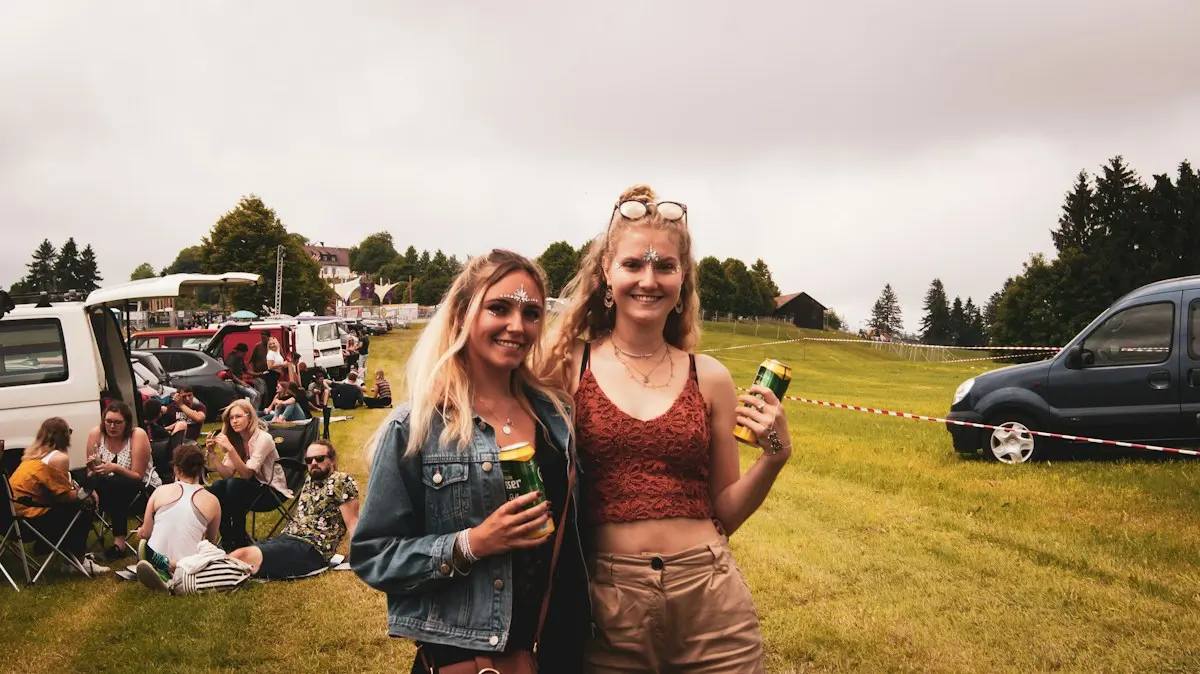
A festival stacks the highest: tickets, camper pitches and camping fields, food trucks with their own tills, merchandise, and a safety dashboard that runs on the scans you are doing anyway. At the gate you scan everything with one app — ticket, camper pitch, membership card. Afterwards, the feedback module sends one anonymous question to the people who were actually there.
A theatre or music venue sells numbered seats on a floor plan, sells season passes and gift cards, and rents the hall to third parties. The theatre audience sees one programme page, not three systems.
What only works when it is one system
This is the part you do not rebuild with integrations.
One scanner at the gate. The steward scans a QR code and the app works out what it is by itself: a ticket, a parking permit, a membership card or a course pass. No second device, no second app, no printed list beside it.
One visitor database. Someone who bought a ticket, became a member and ordered a shirt is one person in your overview — not three rows in three systems. That is the difference between a mailing that is right and a mailing that arrives three times.
One financial overview. Ticket revenue, rentals, web shop and catering in one report, with one VAT record underneath and one Mollie account everything arrives in.
One processor. One processor agreement, one retention period, one place where a GDPR request comes in and gets handled. At your board's next privacy question that saves more time than you would think.
One cost model. Flat amounts per transaction, no percentage that grows with your revenue. What that saves over a season is worked out in the second bill.
When separate tools do make sense
Fair is fair. If you run one small event a year and nothing else, a free ticket shop next to your existing site is perfectly fine — a platform would be solving a problem you do not have.
And if you have a website that works well, you do not need to replace it to sell online. The widget simply goes on it.
The tipping point is where you need your second system. Not because one platform is inherently better, but because the second tool introduces the export work, the second processor agreement and the second queue at the entrance. And the third doubles that again.
How to start
You do not have to move anything all at once. You start with ticket sales and add what you need each season — most organisations take two to three years before their set is complete.
Modules are activated per organisation, so there is always a short conversation first about what fits. The same goes for the website: one conversation about which pages, which modules and whether an existing site comes along, and out of that comes a fixed price before anything is built.
What will not happen: sitting there at the end of the season deduplicating four exports to work out who actually showed up.